
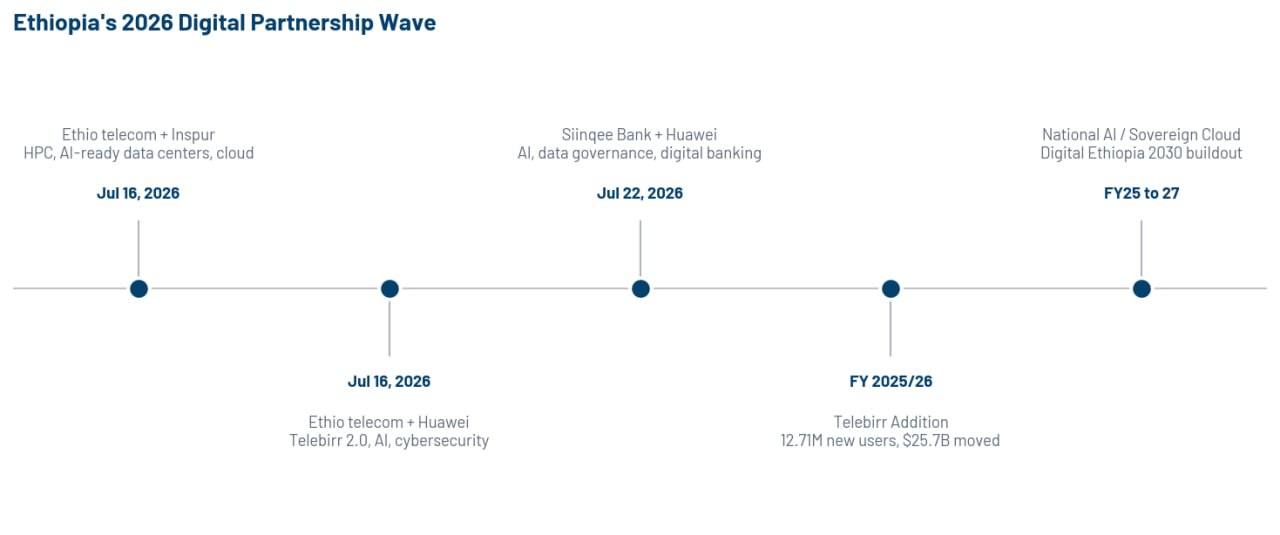
In the space of four short weeks in mid-2026, Ethiopia announced the kind of digital partnerships that reshape an economy for a decade. Ethio telecom and China's Inspur Software Technology began exploring a strategic alliance around high-performance computing, AI-ready data centers and sovereign cloud platforms. Siinqee Bank followed with a long-term partnership with Huawei covering AI, data governance, cybersecurity and digital banking. Ethio telecom itself extended its own Huawei agreement into AI, cloud and enterprise services. Read them together and a pattern emerges.
Ethiopia is no longer simply becoming more connected. It is becoming more digital.
And once an economy becomes more digital, something else grows with it — quietly, relentlessly, in every transaction: data.
Every digital system is also a data factory.
A digital payment produces data. A bank transaction produces data. A mobile-money micro-loan produces data. A digital ID produces data. An ERP screen produces data. An e-commerce order produces data. A connected weather sensor on a farm produces data. And an AI model both consumes and produces data at industrial scale.
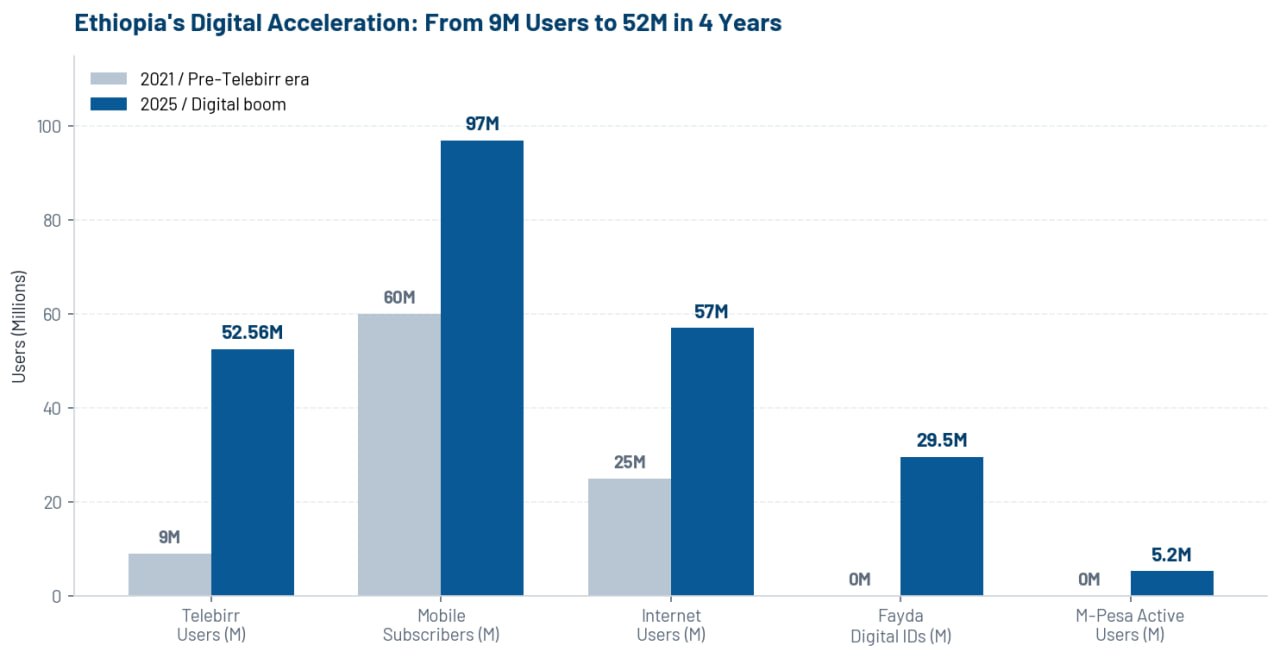
So when a country crosses the threshold from connected to digital, it doesn't just change how people pay, bank or sign in. It fundamentally changes how much information the economy produces every second of every day. The link between the two is mechanical and unforgiving:
The more digital the economy becomes, the more data it produces.
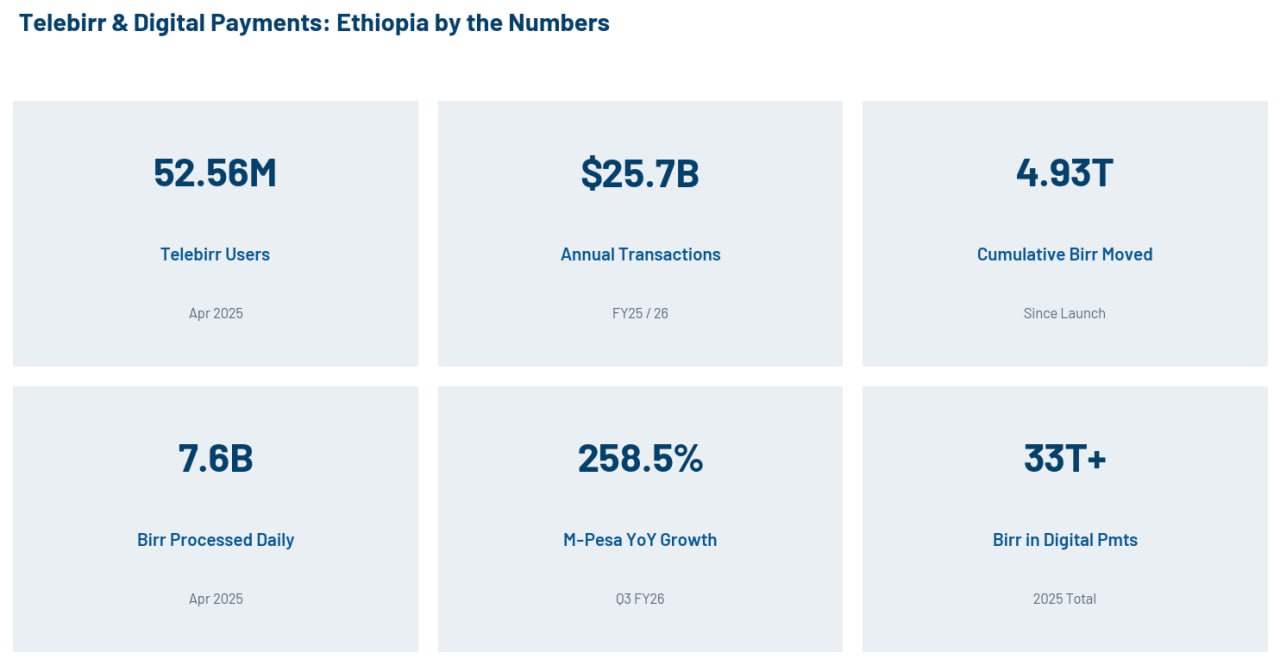
Those are not abstract figures. They describe a country whose every payment, every login, every mobile-money transfer, every AI model query is now a record — and that record economy is what data-economy theory has always been about.
That is the moment a data economy is born.
A data economy emerges when data stops being a by-product and starts being an input — when the same record that proves something happened also helps an organisation decide, plan, score, price, lend, detect, forecast or build the next product. In Ethiopia that transition is already visible across at least five industries:
- Banking — Transaction data → credit decisions → fraud detection → personalisation. Every Telebirr movement is a credit signal.
- Telecom — Usage data → network planning → customer service → digital products. Telebirr has become both a wallet and a dataset.
- Agriculture — Farm data + weather → crop planning → input financing → supply chain. Roughly 70% of Ethiopians depend on agriculture.
- Retail & e-commerce — Sales data → inventory decisions → customer analysis → demand forecasting. M-Pesa Ethiopia processed 19.51B Br in one quarter.
- Government — Citizen data → planning → resource allocation → service delivery. 29.5M+ Fayda IDs already issued.
Read those five lines together and an Ethiopian data economy is no longer a slide in a strategy deck. It is happening, in the background, while everyone is looking at the partnerships.
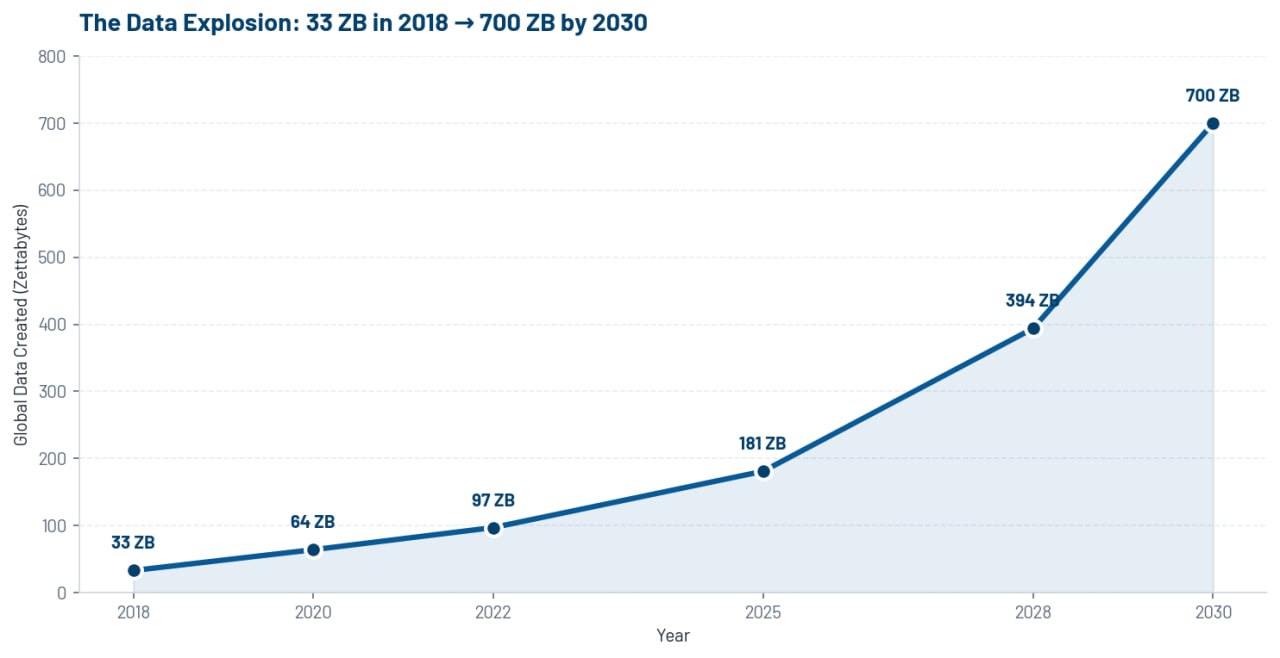
The problem is no longer “not enough data”.
For a decade the conversation in Ethiopia was about coverage, access and adoption. That conversation is now being overtaken by a more uncomfortable one. The real problem is rapidly becoming: we now have more data than we can effectively organise, secure, understand and use.
“A company can be data-rich and information-poor.” — A paradox hiding inside most Ethiopian enterprises today.
Think of a typical Ethiopian company. Finance lives in Excel. Sales lives in a CRM. Inventory lives in a separate system. HR lives in yet another. Customer chats live on WhatsApp. Contracts live in email. And the monthly management report is built by hand, copy-pasted across four screens and emailed at midnight.
That company is drowning in data. It still cannot answer, in real time, the four questions every general manager actually asks:
- How much did we sell this month?
- What is our inventory position right now?
- Which customers owe us what?
- Which branch, product or region is performing best?
Digital Ethiopia 2030 itself names the same problem at the national level — fragmented systems, siloed data and weak interoperability — and elevates data governance, data infrastructure and a sovereign cloud as core pillars of the national strategy.
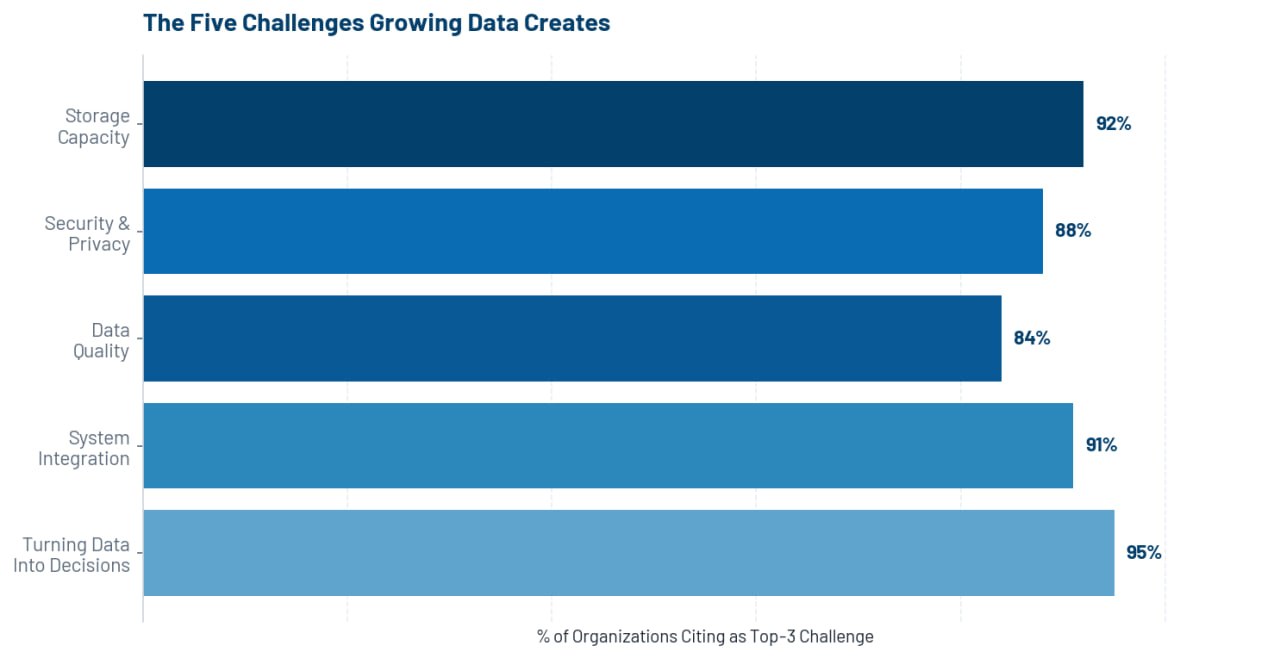
AI does not reduce the importance of data. It multiplies it.
It is tempting to assume that artificial intelligence somehow bypasses the data problem. It does the opposite. AI requires reliable data, accessible data, structured data and governed data before it can produce reliable results. The cleaner the data underneath, the more value AI delivers on top. The messier it is, the faster AI multiplies the mess.
Ethiopia's national strategy now sits on the same logic. Digital Ethiopia 2030 weaves AI infrastructure, national compute capacity and a sovereign cloud into a single policy thread — recognising that AI cannot exist without the data foundation that supports it.
Data, when managed, becomes Ethiopia's newest export.
Handled well, data cascades through an economy like this:
Better decisions →
Higher productivity →
Better financial services →
Smarter agriculture →
More efficient supply chains →
Better public services →
New digital products →
AI innovation →
Economic value
The same cascade is what the World Bank, GSMA and Ethiopia's own Digital Ethiopia 2030 strategy are quietly pointing at: every additional percentage point of digital economy contribution compounds across the rest of the system.
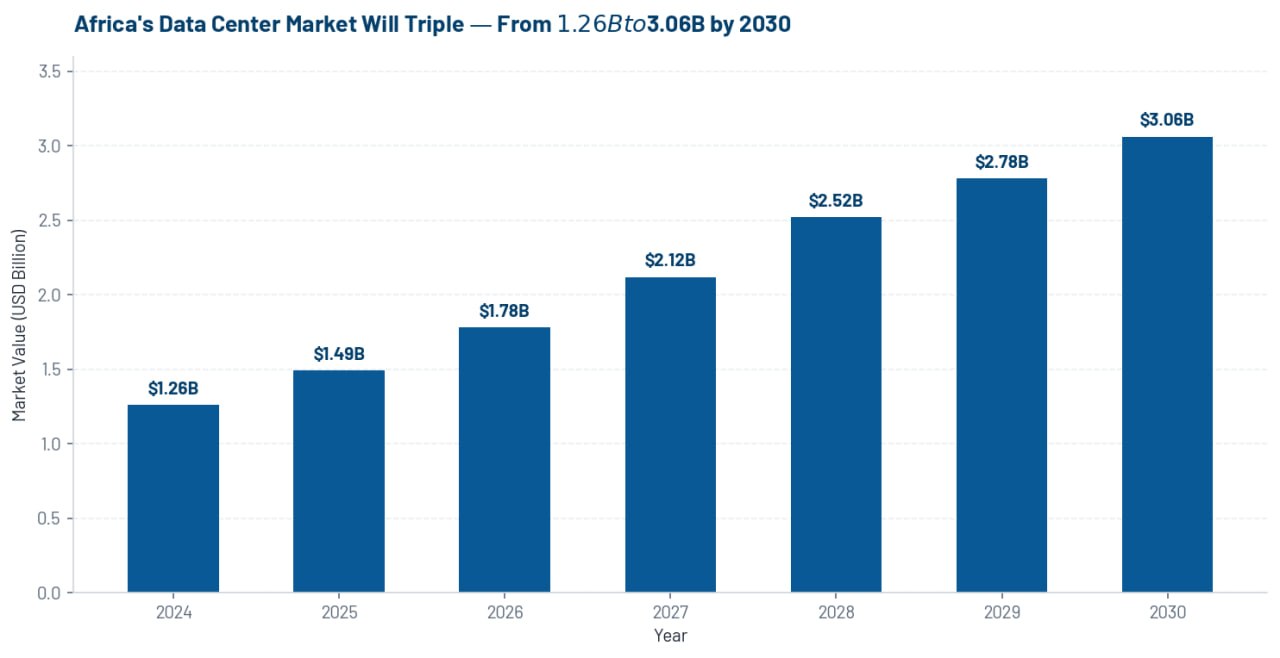
How Ethiopian businesses should respond.
Here is a six-step framework any Ethiopian organisation — bank, factory, farm cooperative, hospital, telco, government agency — can follow to convert runaway data growth into actual intelligence:
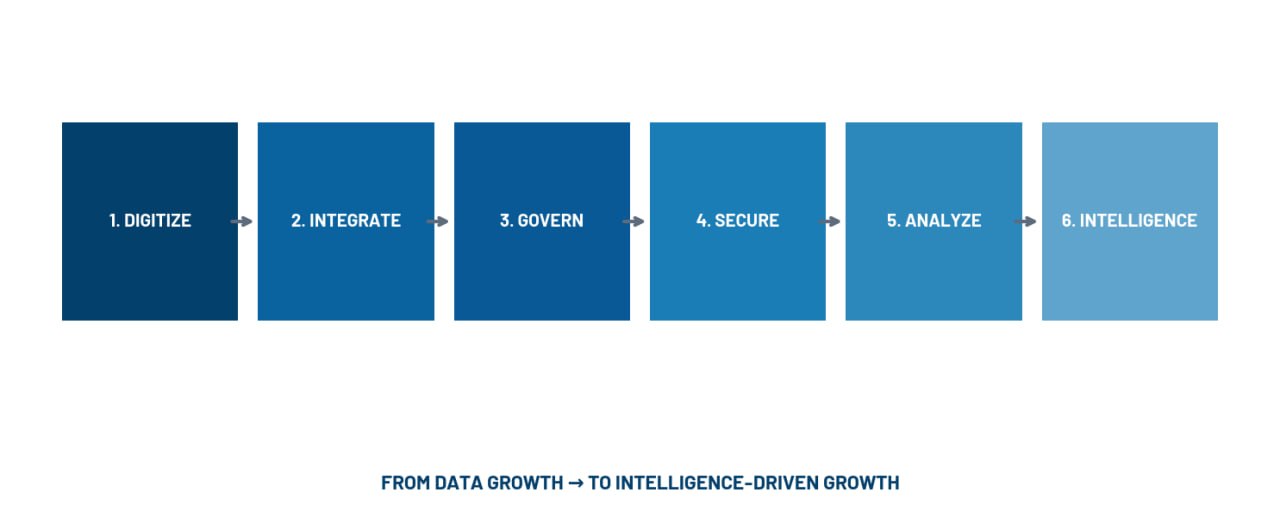
1 · DIGITISE
Stop relying on paper and disconnected manual processes. Capture data at the source — point-of-sale, field, factory, branch.
2 · INTEGRATE
Connect finance, sales, inventory, HR, operations and customer data into one coherent view of the business.
3 · STANDARDISE
Make sure information follows consistent structures, definitions and formats across systems and teams.
4 · GOVERN
Define who owns, accesses, changes, audits and is accountable for each dataset. No governance, no trust.
5 · SECURE
Protect critical business and customer information. Encryption, access control, audit trails are not optional.
6 · ANALYSE
Turn the governed, integrated data into dashboards, forecasts, decisions — and eventually AI-powered intelligence.
From access → digital → intelligence → speed.
- The old competitive question: who has access to technology?
- The next competitive question: who can digitise their business?
- The question after that: who can turn their data into intelligence?
- And the one that will define the next decade: who can act on that intelligence faster than their competitors?
Connectivity → digitalisation → data → intelligence → AI → competitive advantage. That progression is no longer theoretical. It is the operating sequence of every digitally serious economy on the planet.
The data economy is not a future concept. It is being built right now.
At the beginning of this piece we talked about Inspur, Huawei, Siinqee, Telebirr, national cloud, AI data centres, Digital Ethiopia 2030. Read them again with fresh eyes and they all tell the same story — they generate, depend on and create value from the same underlying resource: data.
Ethiopia's digital future will not be determined by how much technology the country adopts. It will increasingly be determined by how effectively Ethiopia collects, connects, protects and transforms its data into economic value.
It already is — 52M Telebirr users, 29.5M Fayda IDs, 5G in 100 cities, a sovereign cloud blueprint, four new hyperscale-style partnerships announced in a single month. The question is whether Ethiopian businesses and institutions will simply generate more data — or learn how to turn that data into intelligence, innovation and growth.
See the data behind Ethiopia's data economy.
Ethiopia's banks, telecom operators, insurers and public enterprises are already publishing exactly what this article calls for — structured, comparable, source-cited disclosures. We have collected, organised and indexed it. 35 institutions. 170 disclosures. 6 sectors. Every figure linked back to its source document. No login. No paywall. Just the data Ethiopian decision-makers actually need.
- DataReportal – Digital 2026: Ethiopia (Nov 2025)
- World Bank – Empowering Ethiopians by Laying the Digital Foundations (Jun 2025)
- World Bank – The Transformative Power of Ethiopia's Digital ID (Feb 2025)
- Ethio Telecom – 2025/26 First-Half Business Performance Report (Jan 2026)
- Ethio Telecom & Inspur Software partnership announcement (Jul 16, 2026)
- Siinqee Bank & Huawei strategic partnership announcement (Jul 22, 2026)
- Ethio Telecom & Huawei partnership expansion (Jul 16, 2026)
- DIGITAL ETHIOPIA 2030 – National Strategy Overview (Cabinet Approved, Dec 2025)
- Fayda National ID Program – National ID & Data Registry (id.gov.et, 2026)
- Safaricom Ethiopia M-PESA Q3 FY26 disclosure (Feb 2026)
- UNESCO – Assessing Internet Development in Ethiopia (Aug 2025)
- IDC Global DataSphere Forecast 2025–2029 (Seagate white paper)
- Statista – Worldwide Data Created/Captured (Nov 2025)
- African Data Centres Association – Africa Data Centre Report 2026
- Research & Markets – Africa Data Centre Construction Outlook 2025–2030
- Fortune Business Insights – Enterprise Data Management Market, MEA (2025)
- Addis Fortune – Ethiopia's Digital Transactions (Jun 2025)
- ConnectingAfrica & ITWeb Africa – M-Pesa Ethiopia growth reports (2025-26)